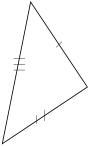
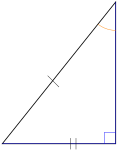
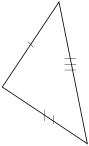
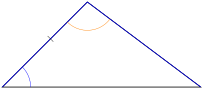
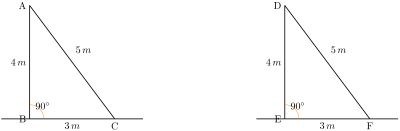
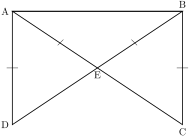
From the diagram and the given information:
-
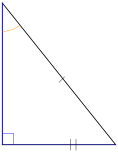
Each ladder forms a right-angled triangle with the wall and the ground.
\(\angle B = \angle E = 90^\circ\)
-
The hypotenuse (ladder length) in both triangles is equal.
-
One corresponding side (height reached on the wall) is equal.
Therefore, the two triangles are congruent by the
RHS (Right angle-Hypotenuse-Side) criterion.
If the second ladder reached a height of
\(3.5\) m instead of
\(4\) m, then the corresponding sides would no longer be equal. Since one of the required equal sides would differ, the triangles would not be congruent.