Subsection 2.8.1 (*) Volume of Cubes and Cuboids

\(\textbf{Volume}\) is the geometric space occupied by an object, or the contents of an object. It is measured in \(\textbf{cubic units}\text{.}\)
Computation of a volume is achieved by multiplying the area of the base of the solid by the height of the solid

Learner Experience 2.8.1.

Demonstrating how volume can be measured in real life situations.
  • Materials Needed:
    • Water, sand or rice.
    • Rulers
    • Measuring cups
    • Transparent boxes or cubical containers of different sizes.
    • (You can take a cuboid-shaped Jerrycan; cut the top to ensure it has a flat top and base)
    • Notebook and pen for recording findings and computing sums.
  1. Measure and record the units for height, length and width of the container.
    Slowly fill the box (or container) with water, sand or rice.
    Measure how many cups are needed to fill the box completely.
  2. What’s the mass of the rice, sand or water that filled the cubical container? Convert to cubic centimetres. Note down your answer.
    Calculate the volume using the formula \(l \times w \times h\)
  3. Compare the actual measurement with your calculations.
NOTE Slight differences may occur due to gaps in sand, spills while transferring or measuring.

Key Takeaway 2.8.2.

The volumes of a cube with side length \(s\) is given by \(V = s^3\text{.}\)
The volume of a cuboid with length \(l\text{,}\) width \(w\) and height \(h\) is given by \(V = l \times w \times h\text{.}\)

Example 2.8.3.

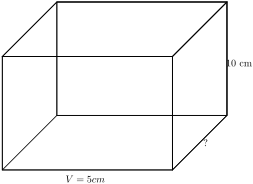
Find the volume of the following cube whose side is \(5\, \text{cm}.\)
Solution.
Step 1: Find the area of the base
\begin{align*} \text{Area of square} = \amp S^2\\ = \amp 5^2\\ = \amp 25 \, \text{cm}^2 \end{align*}
Step 2: Multiply the area of the base by the height of the solid to find the volume
\begin{align*} \text{volume} = \amp \text {areaof base} \times \text{height}\\ = \amp 25 \, \text{cm}^2 \times 5 \, \text{cm}\\ = \amp 125 \, \text{cm}^3 \end{align*}
The volume of the cube is \(125 \, \text{cm}^3\text{.}\)

Example 2.8.4.

A cuboid has a length of 12 cm, a width of 8 cm, and a height of 5 cm. Find its volume.

Example 2.8.5.

Find the volume of a cuboid with base \(6 \times 4\) units and height \(8\) units.
Solution.
Base area = \(6 \times 4 = 24\ \text{units}^2\)
Volume = \(24 \times 8 = 192\ \text{units}^3\)

Exercises Exercises

3.

The cube below has a volume of \(343 \, \text{cm}^3\text{.}\) Find the length of one side of the cube.
Answer.
\(7 \, \text{cm}\)

5.

A big cube is made by stacking \(8\) smaller identical cubes together. If the volume of each small cube is \(27 \, \text{cm}^3\text{,}\) find the volume of the big cube.
Answer.
\(216 \, \text{cm}^3\)

6.

  1. A cubical water tank is \(1 \, \text{m}\) on each side. How many liters of water can it hold when full?
  2. A cubical water tank is \(2 \, \text{m}\) on each side. If it is filled completely, how many liters of water can it hold?
Answer.
  1. \(\displaystyle 1,000 \, \text{liters}\)
  2. \(\displaystyle 8,000 \, \text{liters}\)

7.

A sugar cube has a side length of \(1 \, \text{cm}\text{.}\) If \(1,000\) sugar cubes are stacked together to form a larger cube, find the volume of the larger cube.
Answer.
\(1,000 \, \text{cm}^3\)

8.

A freezer contains \(200\) ice cubes, each shaped like a cube with a side length of \(4 \, \text{cm}\text{.}\) Find the total volume of ice inside the freezer.
Answer.
\(12,800 \, \text{cm}^3\)

9.

A cubical shipping container has a side length of \(2.5 \, \text{m}\text{.}\) Find the total volume of cargo space inside the container.
Answer.
\(15.625 \, \text{m}^3\)

10.

A cuboid has base \(5 \times 3\) units and height \(10\) units. Find its volume.
Answer.
\(150 \, \text{units}^3\text{.}\)

11.

A cuboid has base \(8 \times 2.5\) metres and height \(6\) metres. Find its volume in \(m^3\text{.}\)
Answer.
\(120 \, m^3\text{.}\)

12.

A warehouse floor has area \(250 \, \text{m}^2\text{.}\) If goods are stacked vertically to a height of \(4 \, \text{m}\text{,}\) find the total storage volume available.
Answer.
\(1000 \, \text{m}^3\text{.}\)

13.

A rectangular swimming pool is \(12 \, \text{m}\) long, \(5 \, \text{m}\) wide and \(2 \, \text{m}\) deep. Find the volume of water the pool can hold.
Answer.
\(120 \, \text{m}^3\text{.}\)

14.

A packing box has volume \(360 \, \text{cm}^3\) and base area \(15 \, \text{cm}^2\text{.}\) Find its height.
Answer.
\(24 \, \text{cm}\text{.}\)

15.

A crate measures \((x + 2)\) cm by \((x + 3)\) cm by \(5\) cm. Form an expression for its volume.
Answer.
\((x + 2)(x + 3)(5) \, \text{cm}^3\text{.}\)

16.

A cuboid has a volume of 600 cmΒ³, a length of 10 cm, and a width of 5 cm. Find its height.

17.

A rectangular water tank has a base of 2 m by 3 m and a height of 4 m. How many liters of water can it hold when full?

18.

A shipping company uses boxes shaped like cuboids. Each box has a length of 40 cm, width of 30 cm, and height of 20 cm. If a warehouse has a storage space of 12 mΒ³, how many such boxes can fit in the warehouse?

19.

If the length, width, and height of a cuboid are all doubled, by what factor does the volume increase?

20.

A brick has dimensions 20 cm by 10 cm by 5 cm. A wall is built using 500 such bricks, with no gaps between them. Find the total volume of bricks used in constructing the wall.

21.

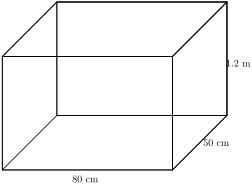
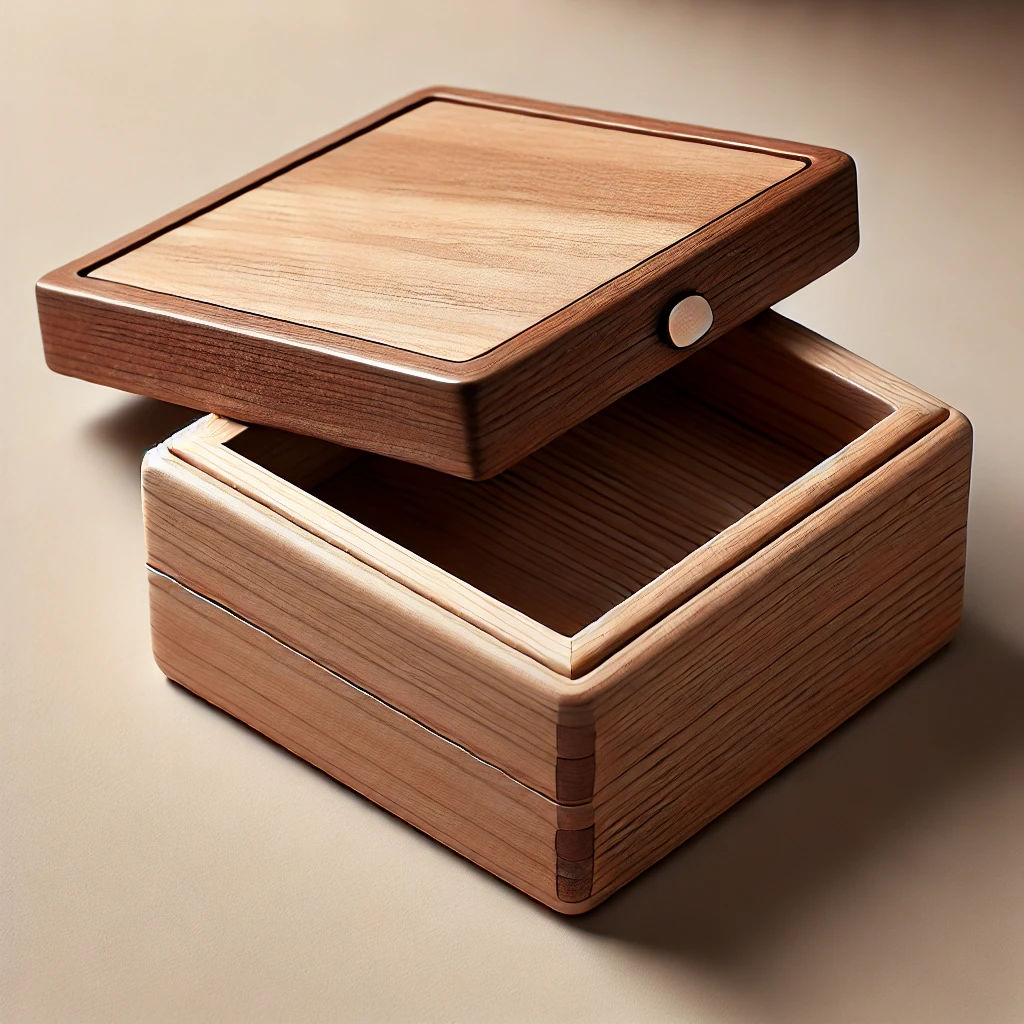
A wooden storage box has a length of 1.2 m, a width of 80 cm, and a height of 50 cm. Find the volume of the box in cubic meters.
(Hint: Convert all dimensions to meters before calculating.)