Activity 2.7.21.
Frustum Volume Lab
Use a bucket-shaped container to model a frustum and measure how much water it holds—connecting real-world experience with the math behind volume.
-
\(\textbf{ Materials Needed:}\)🔹 Calculator🔹 Rulers or measuring tapes🔹 Water and a measuring jug (optional but powerful visual!)🔹 Real plastic buckets, measuring cups, or flowerpots (frustum-shaped)🔹 Worksheets for dimensions and calculations
-
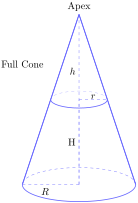
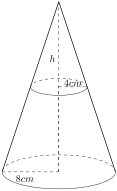
🔹 Review the volume formula of a cone and note that the frustum is a cone with the top sliced off.🔹 Observe real-life frustums: buckets, lampshades, party hats cut short, flower pots, juice glasses, etc.
-
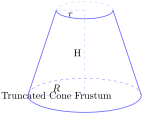
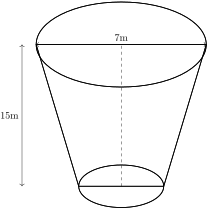
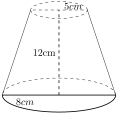
Students work in pairs or small groups. They measure:Diameter (then radius) of top opening: \(\textbf{R}\)Diameter (then radius) of bottom: \(\textbf{r}\)Height of the container: \(\textbf{h}\)Measure and record the dimensions label the top radius R and bottom radius r and the height h in your worksheet and record all measurements in cm..
-
Fill the bucket with water and pour it into a measuring jug to find it’s actual volume in liters. Then calvulate using the formula and find the volume’s capacity in liters.