Activity 2.2.7.
Work in groups
Conditions for Congruence in Triangles
Materials
Instructions
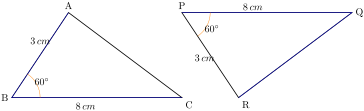
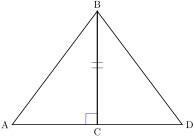
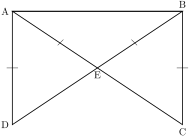
Trace the following triangles on a construction paper.
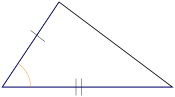
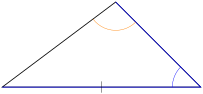
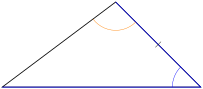
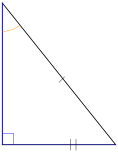
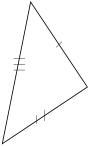
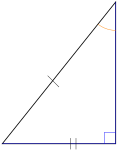
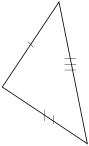
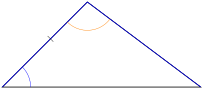
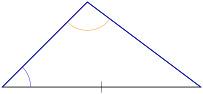
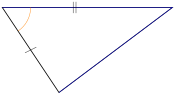
Identify pairs of congruent triangles.
From the pairs of congruent triangles you have identified, which pairs fit the following criteria:
-
The three sides of one triangle is equal to the three sides of the corresponding triangle.
-
Two sides and an included angle of one triangle is equal to the two corresponding sides and the included angle of the other triangle.
-
One side and two included angles of one triangle is equal to the corresponding side and the two included angles of the other triangle.
-
One side and the hypotenuse of a right-angled triangle are equal to the hypotenuse and the corresponding side of another right-angled triangle.
Key Takeaway
Congruence in triangles dependS on the measure of the sides and angles. Two triangles are said to be congruent if a pair of the corresponding sides and corresponding angles are equal.
Criteria for congruence tests in triangles include:
-
Side-side-side (SSS): the three sides of one triangle is equal to the three sides of the corresponding triangle.
-
Side-angle-side (SAS): two sides and an included angle of one triangle is equal to the two corresponding sides and the included angle of the other triangle.
-
Angle-side-angle (ASA): one side and two included angles of one triangle is equal to the corresponding side and the two included angles of the other triangle.
-
Right angle-hypotenuse-side (RHS): one side and the hypotenuse of a right-angled triangle are equal to the hypotenuse and the corresponding side of another right-angled triangle.
-
Angle-angle-side (AAS): one side and two included angles of one triangle is equal to the corresponding side and the two included angles of the other triangle.